


"Parents residing in north London wants to find an extraordinary and experienced instructor to support their smallest child on his early path to becoming an British gentleman."
When reading this advertisement, you might naturally overlook the phrase "initial stages" as simple a turn of phrase.
However, it might be the crucial aspect of this unusual position posting, as it seeks to find a teacher for a infant.
Many of responses have now been sent in since the unnamed family advertised their search for the highly paid tutor, who must be "an exceptional individual".
Over the last few weeks, the advert has attracted attention in the news, with several asking why?
Forward-Thinking Method
A tutoring expert, CEO and founder of a global tutoring firm, which is assisting the family in their quest, said that despite early scepticism, he viewed the concept "far sighted", and "progressive".
When he met the family, he said they recognized the unconventional aspect of their requirement, and how young their son is.
However, they stated that they "preferred not to postpone any longer" to hire a tutor, as they had postponed until their elder sibling was five, and by that stage "cultural conditioning had already become established".
But what does the family indicate by "cultural bias"?
It's "all-encompassing", Adam answered. "The manner you eat, how you speak".
He stated the firstborn had adopted "extremely delicate, body language" from the family, and had adopted their cultural ways. The family told the consultant they did not want this pattern to recur with their infant.
The plan: To hire a English tutor, who needs to speak with standard English accent, to guide the baby from the very start.
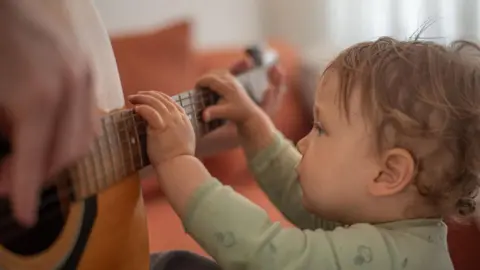
Osmotic Learning
"A lot of the development at the beginning here is rather acquired indirectly," stated the CEO.
It's by means of this natural absorption that the family are aiming the child will acquire the British traits they aim to impart.
He noted the tutor had to be somebody who went to "the right kinds of schools – similar types of schools as the family plan to send their son to".
"The tutor just has to be the appropriate candidate, they'll be carrying out things they aren't even aware they're doing, effortlessly," he commented.
Cost Not Relevant
The family informed him the selected educator should preferably also have knowledge of or interest in horse riding, winter sports, the arts and music so as to influence the child in a broad spectrum of passions.
Additionally though, he said the family hoped the tutor to register the child on a selection of classes so the child would be "equestrian training and learning an musical instrument by the time they are approximately three years old".
In the family's perspective, helping their son develop into a "English gentleman" will bring about accomplishment and provide access.
"Taking into account the rights and wrongs of that, because it's undoubtedly a status symbol," he adds.
But, notwithstanding all this guidance in "English culture", would the child adopt what is termed cultural leaning from the international family he resides with anyway?
"Absolutely", said he. "The parents understand this may not work, but they've merely embraced the view of, 'why not attempt it and we should start as quickly as we can', because the price of it is irrelevant," he explained.
Idealistic and Unrealistic
Several in the education sector who share these concerns.
Another CEO, head and founder of a tutoring service, who also offer individual instructors, wrote that "the development of adopting dual cultures, or actually, forming one's identity, is something that must be lived into, not manufactured."
He wrote that he had emigrated from China to the United Kingdom at the time of childhood, and had been brought up experiencing and embodying both cultures. He progressed to study at the University of Cambridge.
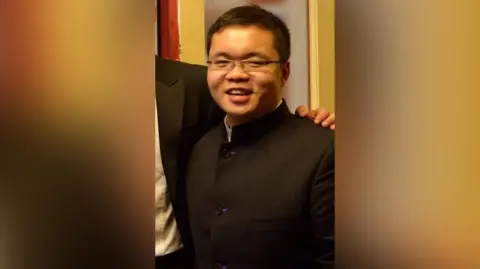
"The notion that a single person can act as a embodiment of Britishness, an individual who can possibly impart the characteristics of a English gentleman onto a one-year-old child, strikes me as idealistic and impractical," he wrote.
"From my perspective, having a distinctly British tutor from babyhood will does not necessarily produce the outcome they desire.
"I did not have such a figure, and however I have been privileged enough to experience many of the experiences they hope for their son."
He added: "The truth is, self-identity can not be forced from the outside influences; it must be selected, and it must be internally driven."
Acquiring Englishness
Of course, UK identity is something the CEO believes can be taught – and marketed.
"I think the fact that the international society views us in this respect is something that we should be cherishing|valuing|appreciating


